Using AstroPay For Anonymous Casino Deposits
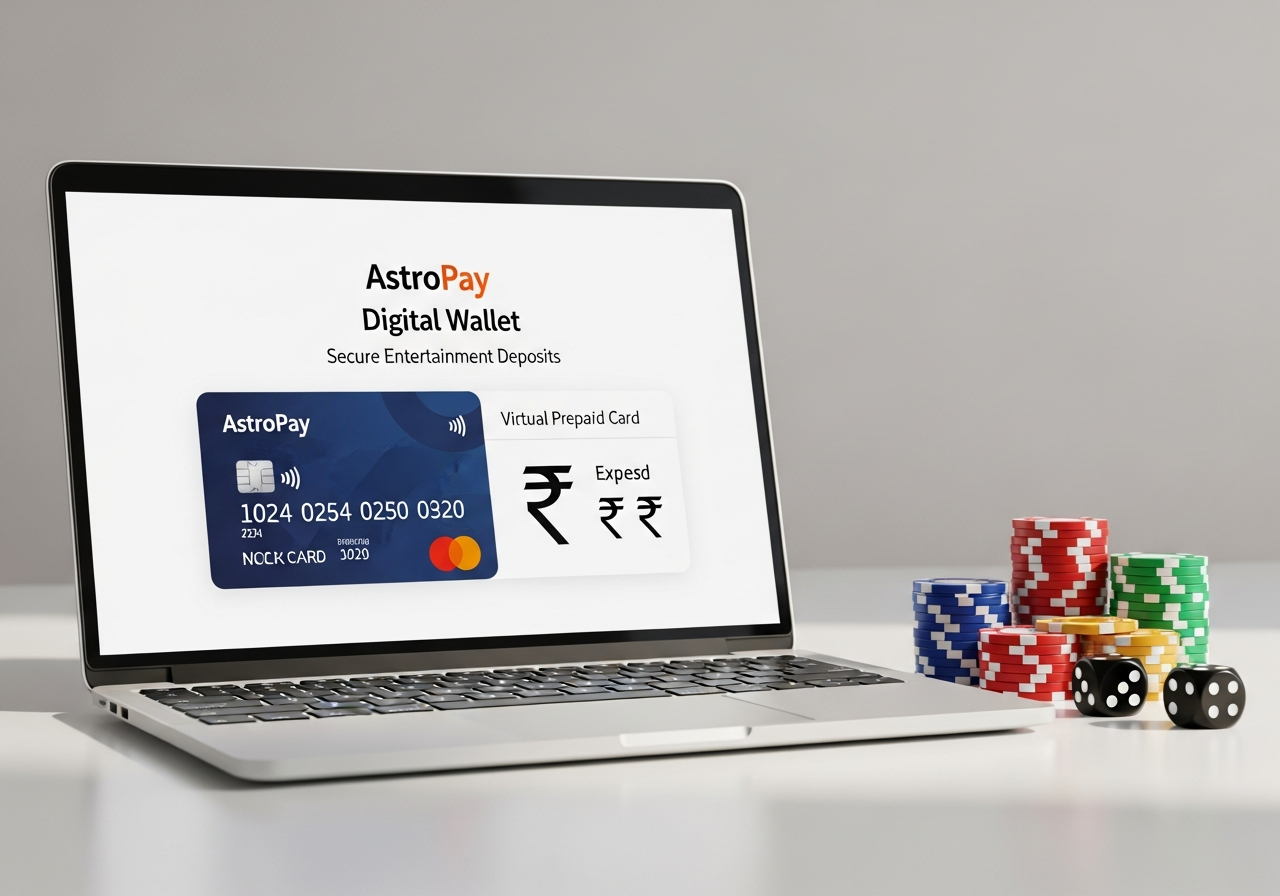
AstroPay has emerged as a popular payment method among Indian casino players seeking faster deposits and reduced direct exposure of banking details to offshore gambling platforms. However, the term “anonymous” often masks a more complex reality: AstroPay can reduce casino-facing visibility, but it does not guarantee true anonymity or eliminate traceability to banks, financial regulators, or payment processors. This article separates the practical convenience of AstroPay from the regulatory and banking risks that Indian users face when using prepaid payment methods for casino deposits.
Understanding what AstroPay actually hides—and what it does not—is essential before funding an offshore account. Similarly, awareness of how the Reserve Bank of India (RBI) monitors cross-border gambling transactions, how banks respond to casino flagging patterns, and how withdrawal mismatches can compound your traceability risk will help you make informed decisions and reduce unnecessary exposure.
What AstroPay Is and Why Indian Casino Players Use It
AstroPay is a prepaid payment platform that acts as an intermediary between your bank account or card and the casino cashier. Rather than sharing your actual bank or card details directly with the gambling operator, you fund an AstroPay account or card, which then processes the deposit. This layering creates a perception of privacy, though the anonymity is more nuanced than many users realize.
The platform operates across multiple product types, each with different funding methods and use cases. The core appeal lies in speed—deposits often credit instantly—and the reduction of direct card exposure to potentially less-regulated offshore casinos. For Indian users, AstroPay also simplifies cross-border payments without needing a dedicated international credit card or access to restricted payment gateways.
AstroPay Card, Voucher, and Wallet: the Basics
| Product | How you fund it | Where it’s used (casino side) |
|---|---|---|
| AstroPay Card | Bank transfer, local card, or wallet top-up | Virtual card number; casinos see prepaid, not your bank details |
| AstroPay Voucher | Cash or local payment method at retail partners; direct wallet purchase | Code-based deposit; anonymous at casino level but requires purchase point traceability |
| AstroPay Wallet | Bank transfer or card deposit to the app | Balance-based transfer; immediate crediting to casino account |
| Payment Rail (API) | Direct bank integration via partner networks | Backend processing; casino rarely sees intermediate step |
The AstroPay Card variant is most commonly used for casino deposits because it allows you to generate a virtual card number without revealing your actual bank card. Vouchers offer the highest perceived anonymity at the casino level but require a purchase point (retail or online), creating a potential trace-back path for compliance investigations. The wallet is the fastest and most straightforward for repeat deposits if you keep a balance loaded.
Why It Became Popular for Casino Deposits in India
- Reduced card exposure: Your primary bank card or account number is not shared directly with the casino, reducing the risk of fraud targeting or compliance visibility at the merchant level.
- Instant deposits: Most AstroPay variants credit within seconds to minutes, eliminating the 1-3 day delays of bank transfers.
- International usability: Unlike UPI or direct Indian bank transfers, AstroPay operates across multiple countries, making it easier for offshore casinos to accept it without local compliance friction.
- No direct bank-to-casino link: The intermediate account creates a psychological and technical separation, though banks can still trace the transaction via processor networks.
- Ease of repeat funding: Once an account is set up, topping up the wallet or generating new card numbers is faster than re-entering bank details.
- Perceived privacy: Many users view AstroPay as a privacy tool, even though the privacy is partial and context-dependent.
How Anonymous Is AstroPay Really?
This is the critical question that most competitor articles understate. The short answer: AstroPay is pseudonymous from the casino’s perspective but not anonymous from banks, payment processors, or regulatory authorities.
| Payment method | Bank details visible to casino | Bank statement traceability | Anonymity level |
|---|---|---|---|
| Direct debit/card | Yes; full card or account number exposed | High; merchant name visible on statement | None |
| AstroPay Card | No; virtual card only, actual bank hidden from merchant | High; AstroPay appears as merchant, processor chain still visible to issuing bank | Pseudonymous (casino-facing) |
| AstroPay Voucher | No; code-based, no card or account visible | Very high; voucher purchase and transfer both appear in records | Pseudonymous (casino-facing) |
| Cryptocurrency | No; wallet address used instead | Moderate; blockchain is pseudo-anonymous but traceable with effort | Pseudonymous (bank-independent) |
| UPI (Indian) | No; VPA used, but issuing bank is identifiable | Very high; UPI transaction history is linked to your bank account | Pseudonymous (bank-linked) |
What AstroPay hides is your actual bank card or account number from the casino operator. The gambling platform sees a prepaid card number or a wallet code, not your HDFC, ICICI, or Axis account details. This prevents the casino from directly targeting your bank for chargebacks, fraud recovery, or regulatory inquiries. From the casino’s perspective, you are pseudonymous.
What AstroPay does not hide is the fact that a transaction occurred. Your bank, the payment processor, and any financial intelligence unit (FIU) or RBI monitoring system can see that money left your account, was converted into an AstroPay balance, and then moved to a gambling platform. The intermediate step is visible in the ledger.
What AstroPay Hides and What It Does Not
Anonymity from the casino is real but partial. When you deposit ₹10,000 via an AstroPay Card into an offshore casino, the operator records a prepaid card transaction but not your personal name, bank account, or identity number. Many casinos do not collect KYC (Know Your Customer) information upfront, especially for smaller deposits. If you withdraw using a different payment method—a cryptocurrency wallet or a third-party money transfer service—the casino may have even weaker identity confirmation.
However, anonymity from your bank is theoretical. The moment you fund your AstroPay account, your bank sees the transaction. If you use a debit card, the merchant name “AstroPay” or its processor appears on your statement. If you use a bank transfer, the bank record shows the beneficiary as AstroPay’s collection account. The RBI, via the Financial Intelligence Unit (FIU), has access to all cross-border transaction reports for amounts exceeding ₹10 lakhs (approximately $12,000 USD) in a financial year, and can request data on smaller transactions if flagged.
The distinction matters operationally. A casino cannot directly report you to your bank based on your pseudonymous card number alone. But your bank can independently flag unusual patterns—large recurring transfers to offshore entities, for example—and either freeze your account or file a Suspicious Transaction Report (STR) with the FIU. The intermediate step of AstroPay does not prevent this; it only makes it slightly less automatic.
Legal and Regulatory Reality for India
The legal status of gambling in India is fragmented, and the legality of using AstroPay to fund offshore casinos is equally grey. This section does not provide legal advice, but it outlines the framework to help you understand the risks.
Is AstroPay Legal to Use in India?
AstroPay itself is a legal payment platform; it is not gambling software or illegal in any jurisdiction. Using AstroPay to deposit money into a regulated casino (e.g., one licensed in Malta, Curaçao, or the UK) is not illegal in most of India, with one crucial caveat: it depends on your state of residence and the specific nature of the gambling activity.
Under the Public Gambling Act of 1867 (a colonial-era law), gambling is largely prohibited across India, but enforcement is uneven and state-specific. Some states, like Goa and Sikkim, have legal casinos with specific licensing frameworks. Playing at an offshore casino from Goa is treated differently than playing from Gujarat or Tamil Nadu, where enforcement is stricter.
The payment method itself—AstroPay—is not the illegal element. Rather, the illegality, where it applies, is tied to the act of wagering with money with intent to win, not the tool you use to fund the account. Using AstroPay does not make offshore gambling legal if you are in a state or jurisdiction where it is prohibited. It also does not provide a legal defense if your bank or the RBI takes action.
What has changed in recent years is regulatory attention. The RBI has issued warnings against offshore gambling platforms and has instructed banks to flag and freeze accounts involved in casino transactions. AstroPay, being a prepaid payment processor, is caught in this net. Banks do not always distinguish between a prepaid card used for gambling and a direct card transaction; compliance systems often flag any large or recurring transfers to known gambling merchants or processors.
RBI Monitoring, Bank Flags, and Freeze Risk
- Threshold monitoring: The FIU tracks all international remittances above ₹10 lakhs per financial year. AstroPay transactions that accumulate to this level will be reported and may trigger review.
- Voucher and retail purchase traces: If you buy an AstroPay voucher from a retail partner, that purchase creates a point-of-sale record. High-frequency voucher purchases in short timeframes may attract attention from the retailer’s compliance team or the payment network.
- Wallet-to-casino transfers: Each transfer from your AstroPay wallet to a casino is a separate transaction visible to payment processors. Banks can see the merchant category code (MCC) and merchant name; many offshore casinos are flagged with gambling-related codes.
- Pattern-based freezes: Banks use behavioral analytics. If your account shows small, regular transfers to AstroPay and no other unusual spending, an algorithm may flag it as high-risk gaming activity. A single ₹50,000 transfer looks different from five ₹10,000 transfers across multiple days—the pattern matters.
- Statement inquiry: When a bank receives an RBI notice or a compliance inquiry, they will review your statements going back months or years. AstroPay transactions will be visible, and the bank may ask you to explain the purpose or freeze the account pending clarification.
- Cross-border compliance: AstroPay is a cross-border platform. Any transaction using it is logged in international payment networks. Banks reporting to SWIFT and other international bodies include AstroPay transactions in their KYC and AML (anti-money laundering) filings.
The realistic risk is not immediate prosecution but account freezes, mandatory disclosure, or forced closure of your bank account. If your bank suspects gaming activity, they may require you to explain the source of the funds or the purpose of the transfers. Refusing to provide explanation or providing false information can result in permanent account closure and, in rare cases, a referral to law enforcement.
How to Deposit with AstroPay at a Casino
The deposit process itself is straightforward, but understanding each step helps you avoid errors that might trigger support issues or compliance reviews.
| Step | Action | Expected result |
|---|---|---|
| 1 | Create an AstroPay account via their website or app; verify email and phone | Account active; you can now generate a card or load wallet |
| 2 | Fund your AstroPay account (via bank transfer, card, or voucher code) | Balance appears in wallet instantly or within hours |
| 3 | Log in to your casino account and navigate to Cashier or Deposit | Deposit options menu appears, usually sorted by payment method |
| 4 | Select AstroPay, Prepaid Card, or the specific AstroPay variant offered | A form appears asking for card or voucher details |
| 5 | Enter the AstroPay card number, CVV, and expiry (or voucher code); enter deposit amount | System validates the card and checks available balance |
| 6 | Confirm deposit; casino may prompt for additional KYC (name, email, address) | Payment processes within seconds to 5 minutes |
| 7 | Refresh your casino account; balance updates with the deposited amount | Funds are now in your casino account and available for wagering |
Casinos may ask for a name and address during the first AstroPay deposit. Some casinos skip KYC entirely for initial small deposits, while others require full verification before any withdrawal is allowed. It is important to use the same name on your AstroPay account, your casino account, and (if asked) your KYC submission. Mismatches can cause deposit failures or withdrawal holds.
Deposit Flow from Registration to Confirmation
Registration at AstroPay takes 5-10 minutes and requires an email address and a phone number. You will receive an OTP (one-time password) to verify your identity. Once verified, you can immediately fund your account via bank transfer (IMPS, NEFT, or UPI) or by purchasing a prepaid voucher from a retail partner.
The funding step is where the real traceability begins. If you use your bank account to top up AstroPay, your bank logs the transaction. The merchant name may appear as “AstroPay BV” or a processor name, depending on your bank’s transaction detail level. If you use a debit or credit card, the card issuer records the transaction. If you buy a voucher in person at a retail location (e.g., a convenience store or mobile recharge counter), there is a physical point-of-sale record.
Once your AstroPay wallet has a balance, you can proceed to the casino cashier. The casino will show AstroPay as a payment option alongside credit cards, bank transfers, e-wallets, and other methods. Selecting AstroPay will prompt you to enter your virtual card number or voucher code. The casino submits this to AstroPay’s payment processor, which verifies the balance and deducts the amount. This typically takes seconds.
After confirmation, your casino account balance updates and you can begin playing. No further confirmation email or SMS is usually required from AstroPay, though you will see the transaction in your AstroPay transaction history and, if available, in your connected bank account statement.
Deposits, Limits, Fees, and Speed
Deposit limits and fees vary significantly by casino and by the specific AstroPay product you use. Understanding these variations helps you plan your funding strategy and avoid surprises.
| Variable | Typical range | What changes it |
|---|---|---|
| Minimum deposit | ₹500–₹2,000 | Casino operator policy; some casinos have no minimum |
| Maximum single deposit | ₹50,000–₹5,00,000 | AstroPay daily limits; casino maximum; your account status |
| Daily cumulative limit | ₹1,00,000–₹10,00,000 | AstroPay account tier; casino daily cap; RBI cross-border limits |
| Processing time | Instant–5 minutes | Payment method and casino processor; usually instant |
| Casino deposit fee | 0–3% | Operator policy; rarely charged, most absorb cost |
| AstroPay card issuance | Free–₹500 | Account type; some variants charge one-time issuance fee |
| Wallet top-up fee | 0–2% | Funding method; bank transfer usually free, card funding may have fee |
| Currency conversion spread | 1–3% | AstroPay markup; varies by GBP/EUR/INR pair |
Minimums, Maximums, and Processing Time
Most casinos accepting AstroPay set a minimum deposit of ₹500 or ₹1,000 to cover processing costs. Some casinos waive minimums for returning players or during promotional periods. The maximum single deposit can be as low as ₹50,000 or as high as ₹5,00,000, depending on the casino’s risk tolerance and AstroPay’s limits for your account.
AstroPay’s limits are typically determined by your account verification level. A basic account (email-verified only) may have a ₹50,000 daily limit, while a fully verified account can deposit ₹5,00,000 or more per day. Verification usually requires proof of identity and address, which ties your AstroPay account to your actual legal identity—a factor that undermines the anonymity narrative.
Processing time is where AstroPay excels. Unlike bank transfers (which take 1-3 days) or international wire transfers (which take 2-5 days), AstroPay deposits typically credit within 30 seconds to 5 minutes. This speed is due to the instant deduction from your prepaid wallet and the direct connection between AstroPay and most major casinos’ payment processors.
Where Fees Can Appear
- Wallet top-up fee: When you transfer money from your bank account to AstroPay, a small percentage (typically 0–2%) may be charged. Bank transfers are usually free, while card-funded top-ups may incur a fee.
- Card issuance fee: Some AstroPay account types charge a one-time fee to issue a virtual or physical card. Standard accounts are usually free; premium tiers may charge ₹200–₹500.
- FX conversion spread: If you are funding in INR but the casino or AstroPay uses a different currency (USD, EUR), a currency conversion markup (typically 1–3%) is applied. This is built into the exchange rate and not always transparent.
- Casino deposit fee: Some casinos charge a flat fee (₹50–₹200) or a small percentage (1–2%) for AstroPay deposits. Most casinos absorb this cost to encourage the use of faster payment methods.
- Withdrawal fee: If you are moving funds from the casino back to AstroPay (or from AstroPay back to your bank), additional fees may apply. This is separate from the deposit process but important to budget for.
- Inactivity fee: Some AstroPay accounts charge a monthly inactivity fee if you do not use the wallet for 90+ days. Keeping a balance parked in AstroPay can result in slow erosion.
AstroPay is often marketed as “fee-free,” but this claim usually applies only to the deposit transaction itself, not the full funding lifecycle. Always check your casino’s fee schedule and AstroPay’s current rate card before funding your account.
Withdrawal Reality and Common Mismatches
This is where the AstroPay experience often breaks down for Indian casino players. Many casinos accept AstroPay for deposits but do not offer it as a withdrawal method. This mismatch creates a practical problem: you fund your casino account via AstroPay but must withdraw via a different method (bank transfer, cryptocurrency, or alternative e-wallet).
The withdrawal mismatch matters because it breaks the “anonymity” narrative. If you deposit via AstroPay but withdraw to a different payment method—say, cryptocurrency or a third-party money transfer service—the casino now has two separate payment trails. Your bank sees AstroPay going out; the casino sees the different withdrawal method; and regulators see both trails if they investigate.
Why Deposit and Withdrawal Rails Often Differ
| Method | Deposit support | Withdrawal support | Practical issue |
|---|---|---|---|
| AstroPay Card | Yes; most casinos accept | No; very few casinos support AstroPay payouts | You cannot move winnings back to the same wallet |
| Bank Transfer | Yes; standard method | Yes; standard method | Traceability is high on both sides; direct to your account |
| Cryptocurrency | No; most casinos don’t accept for deposits | Yes; many casinos support crypto payouts | Creates a mismatch that can trigger scrutiny |
| E-wallet (Skrill, Neteller) | Varies | Varies; sometimes supported for deposits but not withdrawals | Similar mismatch risk |
Casinos usually do not support AstroPay withdrawals because the prepaid card ecosystem is designed for funding, not payouts. AstroPay card balances can be used to spend money (fund the card), but reversing a transaction back to the card creates accounting complexity for casinos. Additionally, anti-money-laundering (AML) regulations in most jurisdictions prefer that payouts go to the original source of funds (a principle called “source-of-funds matching”). If you funded with a card, casinos are encouraged to pay back to a card, not to a different service.
For Indian players, this creates a critical gap. You use AstroPay to avoid direct bank exposure on the deposit side. But on the withdrawal side, most Indian casinos only support bank transfer or cryptocurrency. Bank transfer reverses the anonymity—your winnings go directly to your account, fully traceable. Cryptocurrency requires you to set up a wallet and manage that risk separately. The “anonymous deposit” is now shadowed by a traceable withdrawal, and your bank sees both the outgoing AstroPay transfer and the incoming casino payout.
How to Choose a Safe AstroPay Casino
Not all casinos accepting AstroPay are equally safe or compliant. Choosing one requires checking licensing, payment reliability, and support quality—especially for Indian users navigating offshore operators.
- Verify licensing: Check the casino’s official licensing body (Malta Gaming Authority, Curaçao eGaming, UK Gambling Commission, etc.). Look for a license number on the casino’s website and cross-reference it with the regulator’s public database. A casino licensed in Curaçao or Malta is generally safer than one with no verifiable license.
- Confirm AstroPay acceptance and withdrawal options: Contact the casino’s support team before depositing. Ask: “Do you accept AstroPay Card for deposits? What withdrawal methods do you support?” Knowing the withdrawal options upfront prevents surprises.
- Check user reviews for payment issues: Search for recent reviews on gambling forums or review sites, specifically mentioning AstroPay deposits or withdrawal delays. Red flags include complaints about “pending withdrawals for months” or “deposits not credited.”
- Test support responsiveness: Send a pre-deposit email to support asking a simple question. A casino that responds within 2-4 hours is more reliable than one that takes 24+ hours. Support quality correlates with payment reliability.
- Review KYC requirements: Ask what documentation the casino requires for withdrawal. Some casinos request minimal KYC for deposits but full identity verification for payouts. Understanding this upfront helps you decide whether to proceed.
- Confirm bonus terms and conditions: Ensure bonus wagering requirements are clearly stated and realistic. A 100x wagering requirement on a bonus is nearly impossible to clear; 35x is more standard.
- Look for third-party audits: Check if the casino publishes RNG (Random Number Generator) audits from recognized firms like eCOGRA, iTech Labs, or GLI. This indicates a commitment to fairness.
Licensing, Reputation, and Payment Support Checks
Before any deposit, visit the casino’s homepage and locate the footer links for licensing, terms and conditions, and privacy policy. The licensing information should state the jurisdiction and a specific license number. A licensed casino will publish this prominently; if you have to dig for it, the license may not be genuine.
For Indian players specifically, check whether the casino has a dedicated support team or explicit documentation acknowledging Indian users. Some jurisdictions (like the UK) restrict marketing and payment services to certain geographies; a UK-licensed casino may not officially serve Indian players, creating a legal grey area. Casinos licensed in Curaçao, Malta, or Costa Rica typically have no such restrictions and actively serve Asian markets.
Payment support should include a live chat or email option. Test it with a pre-deposit question about AstroPay acceptance, deposit minimums, and withdrawal methods. A casino that avoids the question or gives vague answers is signaling poor operational standards.
KYC consistency is crucial. Ask whether the casino requires the same name on your AstroPay account, casino account, and any withdrawal method. If names must match exactly, ensure your AstroPay account is under the same legal name you use for your bank account and casino registration. Mismatches are the leading cause of withdrawal delays or rejections.
Red Flags to Avoid
- Unrealistic bonus offers: “300% match bonus with 5x wagering” sounds great but is mathematically suspicious. Most reputable casinos offer 100–150% matches with 30–50x wagering. Overly generous bonuses often come with hidden terms or are designed to trap funds.
- Unclear or missing cashier information: If the casino’s website does not clearly list payment methods, withdrawal limits, or processing times, proceed with caution. Transparency is a sign of regulatory compliance.
- No verifiable license or license link is broken: If the license number does not resolve to a regulator’s database, the license is either fake or expired. Do not deposit at an unlicensed casino.
- Delayed support responses or vague answers: If support takes 24+ hours to respond or deflects payment-related questions, the casino likely has operational issues. This often correlates with slow or denied withdrawals.
- Negative reviews about withdrawals or account closures: If multiple recent reviews mention “account closed without reason” or “withdrawal rejected after weeks,” stay away. These are signs of unfair practices or regulatory trouble.
- No SSL encryption or unsafe payment forms: Check that the casino’s website uses HTTPS (a padlock icon in the address bar). If payment forms are unencrypted, your card or wallet data could be intercepted.
- Pressure to deposit or bonus strings: Legitimate casinos allow you to play small stakes or demo games before depositing. Casinos that pressure you to deposit immediately or tie bonuses to impossible wagering are trying to extract money, not offer value.
AstroPay vs Other Casino Payment Methods in India
AstroPay is not the only option for funding offshore casinos from India. Understanding how it compares to alternatives—bank transfers, UPI, credit cards, and cryptocurrency—helps you choose the right method for your situation.
| Method | Privacy | Speed | Withdrawals | India suitability |
|---|---|---|---|---|
| AstroPay Card | High (casino-facing) | Instant (5 min) | Low (not usually supported) | Medium (bank-traceability risk) |
| Debit/Credit Card | Low (card details exposed) | 1–5 min | Low (casinos often reject) | Low (direct bank flag risk) |
| Bank Transfer (NEFT/IMPS) | Low (full traceability) | 1–3 days | High (most casinos support) | Low (RBI monitoring threshold) |
| UPI (BHIM, Google Pay) | Low (linked to bank account) | Instant | Very low (rarely supported) | Very low (no offshore support; RBI restricted) |
| Cryptocurrency (Bitcoin, Ethereum) | Very high (if used correctly) | 10 min–1 hour | High (widely supported) | Medium (exchange regulation tightening) |
| Skrill/Neteller | High (prepaid) | Instant | Varies | Low (limited India support; fees high) |
| Paysafecard | High (voucher-based) | 5–10 min | Low (not usually supported) | Low (limited availability in India) |
Best Use Cases by Payment Type
AstroPay is best suited for Indian players who want to reduce direct bank-card exposure during deposits but are willing to accept that anonymity is pseudonymous and limited to the casino level. If your priority is speed and you are comfortable with moderate banking risk, AstroPay is a solid choice.
Bank transfers (NEFT or IMPS) are the safest legally but carry the highest traceability risk. Use them only if you are in a state where offshore gambling is explicitly tolerated or if your casino deposits are infrequent and small enough to avoid RBI threshold monitoring.
UPI is convenient for domestic payments but offers no benefits for offshore casinos; most do not accept it, and the Reserve Bank has actively discouraged UPI-to-gambling-platform transfers through bank partners.
Cryptocurrency is the most anonymous option if you acquire coins via a peer-to-peer (P2P) exchange and do not use regulated crypto exchanges (which require KYC). However, converting INR to cryptocurrency on a regulated exchange creates a compliance record, defeating the anonymity purpose.
For most Indian casino players, AstroPay + cryptocurrency (for withdrawal) is a practical middle ground: AstroPay reduces exposure on the deposit side, and cryptocurrency withdrawal avoids the direct bank reversal on the payout side. The drawback is the two-step funding and withdrawal complexity and the volatility if you hold cryptocurrency between casino winnings and withdrawal.
Practical Tips to Reduce Risk
Playing at offshore casinos involves inherent regulatory and banking risk. While this article is not advising you to evade regulation, it is important to understand practical steps that reduce unnecessary exposure and keep your account and bank relationship intact.
- Use a dedicated account or separate funding source: Consider opening a separate bank account specifically for casino funding. This creates a clear segregation between your personal finances and gaming funds, making it easier to explain transactions if your primary bank asks.
- Keep transaction records: Save all AstroPay transaction confirmations, casino deposit receipts, and withdrawal confirmations. If a bank inquires about your transfers, you can provide evidence of the full transaction chain and the casino’s identity. Incomplete records trigger suspicion.
- Fund infrequently in reasonable amounts: Multiple small deposits in a single day look worse than one or two larger deposits weekly. Large, spaced-out deposits are less likely to trigger pattern-based flags.
- Use the same identity across all accounts: Ensure your AstroPay account name, casino account name, bank account name, and withdrawal destination all match. Mismatches create suspicion and can cause withdrawal holds or rejections.
- Avoid mixing payment sources: If you fund your AstroPay wallet with a bank transfer on Day 1 and a card transfer on Day 2, you create multiple funding trails. Stick to one or two consistent methods.
- Be honest with your bank if asked: If your bank contacts you about casino transfers, do not lie or claim the transfers are for something else. A straightforward explanation (“I use AstroPay to fund offshore casino accounts for entertainment”) is better than a vague or dishonest answer, which can trigger account closure and potential legal involvement.
- Monitor your bank statements regularly: Check for unusual charges or duplicate transactions. If you see a casino or AstroPay charge that you did not make, report it immediately to your bank.
Funding, Recordkeeping, and KYC Discipline
Maintaining clear records of your casino and AstroPay activity is not just good practice—it is essential if your bank or a regulator inquires. Keep the following:
- AstroPay account statements: Download a monthly or annual statement from your AstroPay dashboard showing all top-ups, transfers, and balances.
- Casino deposit and withdrawal confirmations: Most casinos allow you to view your transaction history in the account dashboard. Screenshot or export a monthly record.
- Bank statements: Ensure your bank statements show all transfers to and from AstroPay. If your bank uses transaction descriptions like “Payment to AstroPay,” that is sufficient evidence of the intermediate step.
- Correspondence with casinos: If you have support tickets or emails discussing deposits, withdrawals, or account limits, save them. These are evidence of your account activity and the casino’s operational standards.
- Proof of identity used for KYC: If the casino requests identity verification (passport, Aadhaar card, driver’s license), keep a copy of what you submitted. This proves consistency between your casino identity and your legal identity.
If your bank or the RBI ever investigates your transactions, this documentation allows you to explain that your casino activity is infrequent, transparent, and limited to a specific entertainment purpose. A player with clean records and consistent identity across accounts is treated very differently from one with fragmented records and multiple aliases.
Common Mistakes Indian Players Make
- Using different names across accounts: Funding AstroPay under one name, registering the casino under a different name, and withdrawing to a bank account under yet another name creates a chain of mismatches. Banks and casinos flag this as potential money-laundering activity.
- Ignoring withdrawal method support upfront: Depositing via AstroPay without confirming that your chosen casino supports the withdrawal method you want (e.g., cryptocurrency or bank transfer) leaves you stranded. You may be unable to access your winnings without opening a crypto exchange account or paying high fees for alternative methods.
- Funding AstroPay multiple times in a single day: This pattern looks like rapid cycling or stacking deposits to hide the total amount. Spacing out deposits across days or weeks looks more natural and avoids triggering pattern-based compliance algorithms.
- Skipping the casino licensing check: A casino without verifiable licensing or with a broken license link may be a scam. Losing your deposit or being unable to withdraw is worse than choosing a slower or less convenient casino that is actually regulated.
- Not reading bonus terms and conditions: Many players deposit bonus funds without understanding the wagering requirements, game restrictions, or withdrawal conditions. A bonus locked behind a 100x requirement is essentially a marketing trap, not free money.
- Keeping a large balance in AstroPay: AstroPay charges inactivity fees if you do not use the wallet for 90+ days. Additionally, a large parked balance creates a temptation to over-gamble. Fund only what you intend to use in a short period (days or weeks, not months).
- Using AstroPay for unrelated remittances or money transfers: AstroPay is designed for casino funding. Using it to transfer money to friends, family, or third parties creates compliance confusion and may result in your account being frozen for suspected money-laundering activity.
AstroPay offers genuine practical benefits for Indian casino players seeking faster deposits and reduced direct card exposure to offshore platforms. However, the “anonymous casino deposits” narrative is overstated. AstroPay is pseudonymous at the casino level but offers minimal protection from bank scrutiny, RBI monitoring, or payment processor investigation.
The realistic approach is to treat AstroPay as a convenience tool, not a secrecy tool. Use it to streamline your gaming funding, but maintain transparency with your bank, consistent identity across accounts, and clean record-keeping. The casinos you choose should be licensed, support full withdrawals via a method you trust, and offer reliable support. The regulatory environment in India remains uncertain, so frequent, large, or suspicious-looking casino deposits carry real risk of account freezes or regulatory inquiry regardless of your payment method.
By separating the actual benefits (speed, reduced card exposure at the merchant level) from the overstated claims (true anonymity, zero traceability), you can make informed decisions about whether AstroPay is right for your gaming and financial situation.